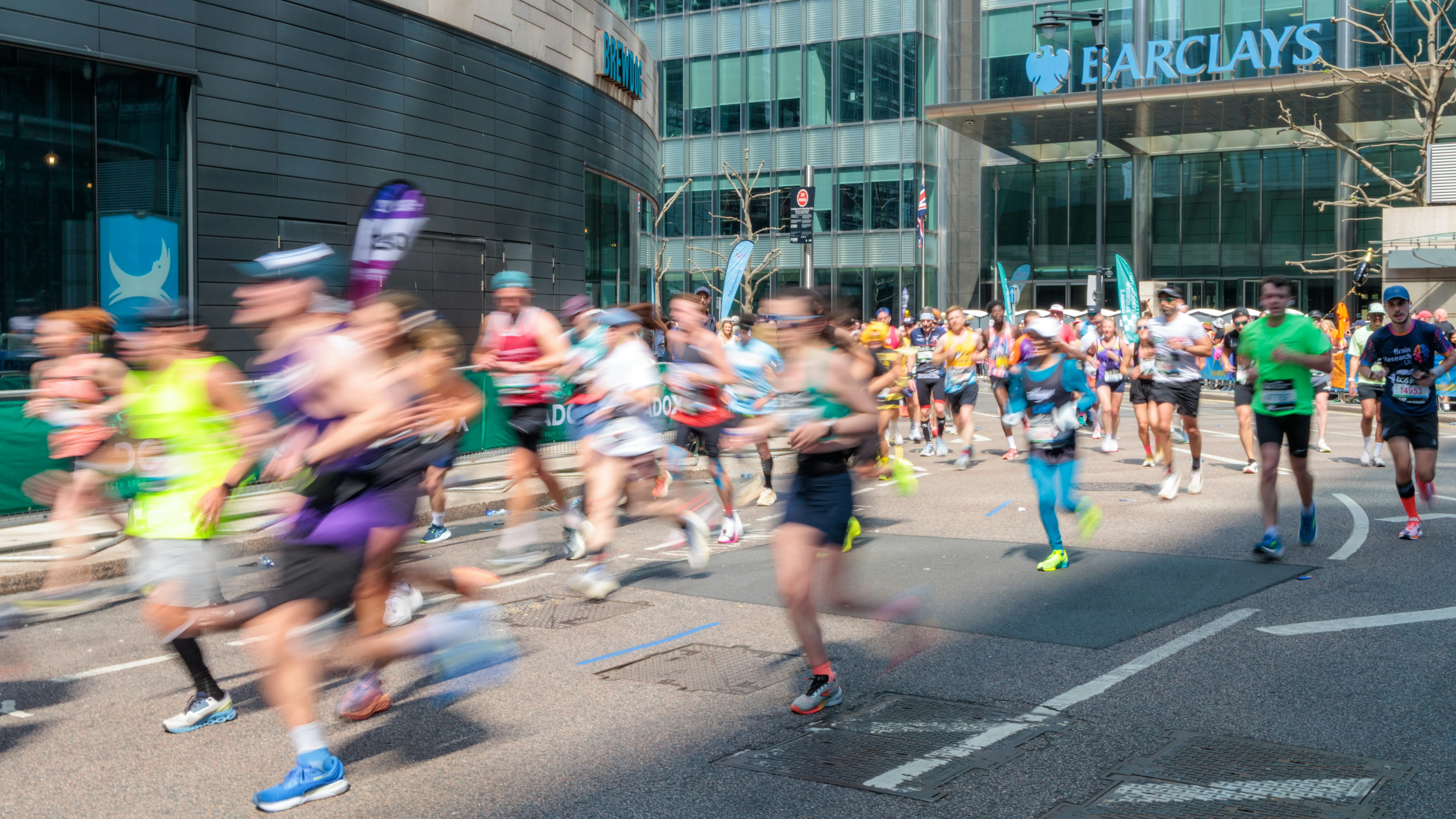
The last four weeks are where a marathon nutrition plan does its real work: fueling your peak long runs, training your gut to absorb race-day carbohydrate, and filling glycogen stores in the final 36–48 hours. Below are the evidence-based targets, scaled to body weight, with a 60 kg (132 lb) runner as the worked example.
How Many Carbs Do You Need While Training for a Marathon?
Daily carbohydrate needs follow your training load, not the calendar. The 2016 joint position statement from the American College of Sports Medicine (ACSM), the Academy of Nutrition and Dietetics and Dietitians of Canada sets these ranges:
| Training day | Carbohydrate per day | 60 kg (132 lb) runner |
|---|---|---|
| About 1 hour, moderate intensity | 5–7 g/kg | 300–420 g |
| 1–3 hours, moderate to hard | 6–10 g/kg | 360–600 g |
| 4–5 hours daily (rare for marathoners) | 8–12 g/kg | 480–720 g |
Weeks 4 and 3 before the race usually hold your longest runs, so aim for the upper end on those days and the day after. Under-eating carbs also carries health costs: the IOC's 2023 consensus on Relative Energy Deficiency in Sport (REDs) in the British Journal of Sports Medicine (Mountjoy et al.) links low carbohydrate availability to poor bone health, lowered immunity and depleted iron.
If the volume of food is a struggle, juice or sports drink around sessions adds carbohydrate without much bulk.
How Much Protein Should Marathon Runners Eat?
The same ACSM statement puts athletes at 1.2–2.0 g/kg of protein per day (72–120 g for a 60 kg runner) and recommends spreading it across the day in servings of roughly 0.3 g/kg, about 18 g each, rather than loading it all into dinner.
After a long run, the statement's recovery targets are 1.0–1.2 g/kg of carbohydrate per hour for the first 4–6 hours, plus 0.25–0.3 g/kg of high-quality protein early on. A rice-and-chicken plate or a milk-and-banana smoothie covers it.
The statement calls vitamin and mineral supplements generally unnecessary with an adequate, varied diet; iron is the common exception (see below).
How to Train Your Gut on Long Runs
Race-day carbohydrate targets, as summarized in a 2025 review of carbohydrate strategies in Nutrients ↗ (Cao et al.), depend on how long you'll be out there:
- →Longer than 2.5 hours: 60–90 g of carbohydrate per hour
- →1 to 2.5 hours: 30–60 g per hour
Most marathoners fall into the first band. Absorption is the limit: glucose alone is oxidized at about 1.0–1.2 g per minute, while combining glucose and fructose raises that to roughly 1.5 g per minute. That's why the 90 g per hour end calls for dual-source gels or drinks.
The evidence that the gut adapts is encouraging but thin. A 2023 systematic review of gut training in Sports Medicine ↗ found only eight qualifying studies. Two-week protocols of repeated carbohydrate feeding during exercise cut gut discomfort by an average of 47%, and two studies found 45–54% less carbohydrate malabsorption, although a third found no change. One protocol cited in the Nutrients review had runners complete ten 60-minute runs over two weeks, taking a 30 g gel at 0, 20 and 40 minutes (90 g in the hour); gut symptoms dropped and endurance performance improved.
How to apply it in weeks 4 to 2:
1. Use every long run and marathon-pace session as a fueling rehearsal, with the exact gels, chews or drink you'll race with. Check the official race website for what's served on course.
2. Start at an intake you already tolerate and build toward your target across sessions.
3. Eat your planned race-morning breakfast before at least two long runs, with the same gap between eating and starting.
4. Treat nausea or urgency in week 3 as data: fix it now, not at 30 km.
Carb Loading: What to Eat 36–48 Hours Before a Marathon
The standard guideline, from the IAAF (now World Athletics) 2019 consensus statement on nutrition for athletics (Burke et al.), is 10–12 g/kg of carbohydrate per day, which is 600–720 g for a 60 kg runner. A 2026 meta-analysis in the Scandinavian Journal of Medicine & Science in Sports (Jones et al.) concluded that intakes above 8 g/kg per day over the same 36–48 hours raise muscle glycogen, so if 10–12 g/kg leaves you uncomfortably full, 8–10 g/kg is a reasonable compromise.
Making it work:
- →Choose familiar, low-fiber, low-fat carbs: white rice, white bread, bagels, pasta, peeled potatoes, ripe bananas, juice and honey.
- →Spread intake across five or six eating occasions. A single big pasta dinner the night before is too late to do most of the work.
- →Expect the scale to rise. Each gram of stored glycogen binds about 2.7 g of water, so weight gain during loading is a sign it's working.
On race morning, the ACSM statement advises that food eaten 1–4 hours before the start should top up carbohydrate stores. Use the breakfast you already tested in training.
Caffeine and Hydration: What to Test Before Race Day
Caffeine is one of the few supplements with consistent endurance evidence. The International Society of Sports Nutrition's 2021 position stand (Guest et al.) reports benefits at 3–6 mg/kg, or 180–360 mg for a 60 kg runner, most commonly taken about 60 minutes before exercise. Doses around 9 mg/kg bring more side effects with no added benefit. Trial your dose on a long run; jitters, gut upset and poor sleep are the usual trade-offs.
Hydration: use the final month to estimate your sweat rate. Weigh yourself without clothes before and after a 60-minute run at marathon pace and add back any fluid you drank; each 1 kg lost is roughly 1 L of sweat. In data reviewed by Armstrong in Nutrients (2021), marathon runners' average sweat rates were 0.81 L/h at 7°C (45°F), 0.96 L/h at 10–12°C (50–54°F) and 1.52 L/h at 20°C (68°F). Aim to replace part of your losses rather than all of them. The same review notes that ACSM's 2007 fluid position stand and the International Marathon Medical Directors Association both point to 400–800 mL per hour, and the 2015 international consensus on exercise-associated hyponatremia gave drinking to thirst a strong recommendation. Use thirst as the guide and your sweat-rate number as the ceiling.
When Nutrition Becomes a Medical Issue
- →Don't diet in the final month. Cutting calories during peak training is a direct route to low energy availability. Missed periods, frequent illness, bone pain or unusual fatigue are REDs warning signs; see a sports doctor.
- →Check your iron if fatigue is out of proportion to training. Female endurance runners are at higher risk because of menstrual and exercise-related iron losses, and reviews commonly use a ferritin below about 30 µg/L to flag deficiency. Get a blood test before supplementing; iron dosing is a decision for your doctor.
- →Overdrinking is dangerous. Gaining weight during a long run means you drank more than you sweated. Vomiting, confusion, severe headache or swollen hands during or after a race can signal hyponatremia; get medical help immediately and stop drinking plain water.
- →Existing conditions: if you have diabetes, a heart or kidney condition, or take regular medication, check your carb-loading, caffeine and electrolyte plans with your doctor.
- →Red flags in training: chest pain, fainting, palpitations or unusual breathlessness mean stop and get assessed.
Bottom Line
Eat to your training load in weeks 4 and 3, treat every long run as a fueling rehearsal at 60–90 g of carbohydrate per hour, and keep race week ordinary until the final 36–48 hours, when carbs rise to 8–12 g/kg from low-fiber foods. On race day, use only what you've already tested: the breakfast, the gels, the caffeine dose.
Frequently Asked Questions
When should I start carb loading before a marathon?
Start 36–48 hours before the gun: for a Sunday-morning marathon, Friday morning or evening. Before that, eat your normal training diet.
How many gels do I need during a marathon?
Divide your hourly carbohydrate target by the carbohydrate listed on the gel's label. With 30 g gels and a 60 g per hour target, that's two per hour, and any sports drink you take at aid stations counts toward the total.
Should I eat protein while carb loading?
Yes, but keep servings modest so carbohydrate stays the priority. The 2025 Nutrients review notes that elite endurance athletes moderately reduce protein in the final 48 hours, partly to protect gut comfort.
Is it okay to try new foods the month before a marathon?
Test new fuels in weeks 4 and 3, then stick to familiar foods for the final 10 days; the Nutrients review flags diarrhea in that window as a risk factor for race-day gut problems.
Photo by Henry Ren ↗ on Unsplash ↗