Best For: Young runners and beginners looking to build a consistent habit without the pressure of a single-day event.
Course Character: Completely customizable; you choose your own terrain.
Logistics Score: ⭐⭐⭐⭐⭐ (It's virtual, so you don't have to go anywhere.)
Value for Money: ⭐⭐⭐⭐ (High value for those seeking flexibility and low-stress training.)
---
This isn't a race; it's a month-long discipline test. If you are looking for a crowd, a starting gun, and a finisher's medal handed to you at a specific time, look elsewhere. If you want to chip away at a distance on your own terms, this is a smart, low-stakes way to build a base.
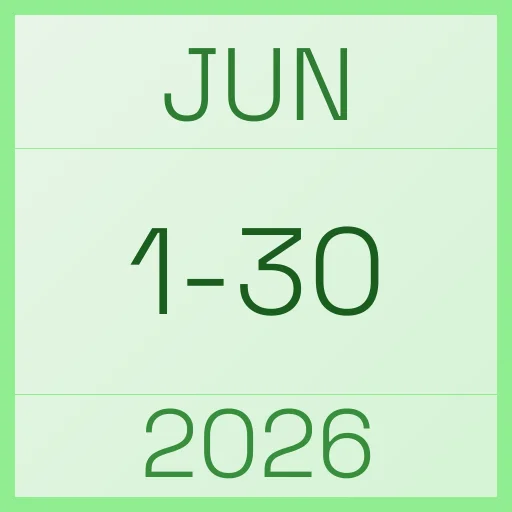
OBX GO FAR 2026 is a virtual running challenge running from June 1 to June 30, 2026. Participants can choose to complete either a Half Marathon (13.1 miles) or a Full Marathon (26.2 miles) cumulative distance. It is specifically designed to be accessible, allowing runners to accumulate their mileage anywhere in the world over the course of the month.
Which distances can I tackle?
You have two primary options: the Half Marathon (13.1 miles) and the Full Marathon (26.2 miles). Because this is a cumulative challenge, you aren't grinding these out in one go. For the Half, you could literally walk half a mile a day; for the Full, it's roughly one mile daily. It is a game of consistency rather than a test of raw speed.
What kind of terrain am I looking at?
Since there is no fixed course, the terrain is entirely up to you. You can stick to the pavement in your neighborhood, hit the local trails, or use a treadmill if the weather turns. The beauty here is the lack of restriction—you aren't at the mercy of a hilly route designed by a race director.
Is there any gear I should prepare for?
Since you are setting your own schedule, you aren't fighting a specific race-day weather window, but June can be unpredictable. If you're running in the heat, hydration is your priority. Because this is a month-long endeavor, focus on high-quality, anti-chafe gear and shoes that can handle daily, repetitive mileage to avoid the overuse injuries that come with building a new habit.
How do I prove I actually ran the miles?
The organizers are keeping it flexible. You can track your progress using any GPS watch, a smartphone running a running app, or even a manual log. It’s designed to be low-friction so you spend more time running and less time worrying about data validation.